
Book resources
Breathing to develop intuition
Breathing to develop intuition and health
An excerpt from the book “Seeing Without Eyes Is Possible: Intuitive Vision and Expanded Intuition,” by Tània Agorreta and Jordi Imbert. We are using this excerpt to talk about breathing exercises that develop intuition, as well as other breathing exercises for other purposes.
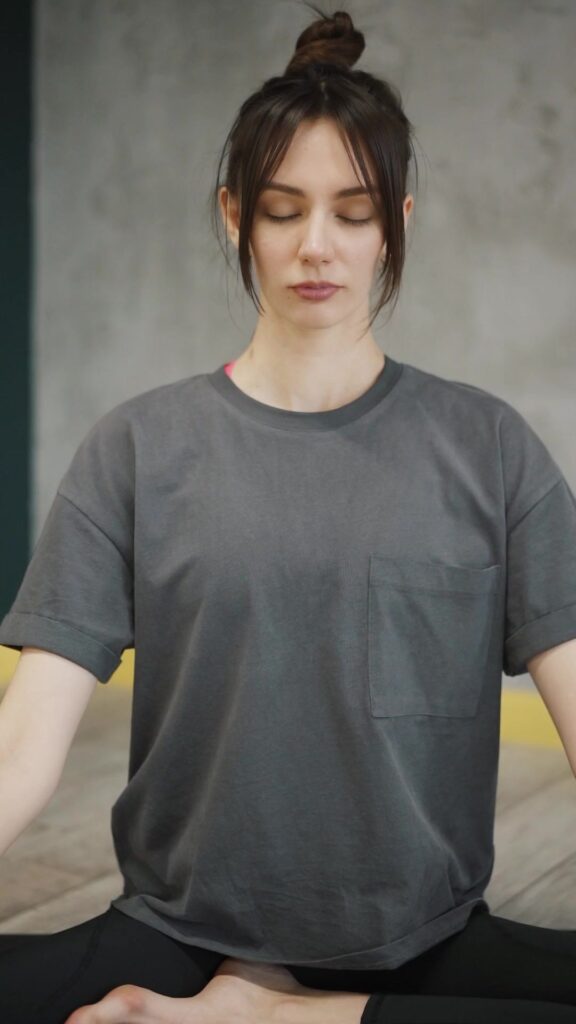
Caution: people with asthma or breathing difficulties should consult a physician and a breathing coach before trying the following exercises.
Three types of breathing
- 👉 Breath of fire
- 👉 Breath of water
- 👉 Linden tea breathing
Conscious breathing, the first pillar of Intuitive Vision
These breathing exercises, together with meditation and other aspects, help develop our intuition by making us able to pick up subtle information. This is a fundamental part of developing Intuitive Vision, and it is its first pillar.
Breath of fire
Breath of fire, similar to kapalabhati, consists of rapid breaths of much more than six cycles per minute.
Remember that a frequency higher than six cycles per minute activates our sympathetic nervous system.
These breaths are suitable to mobilize energy, oxygenate the body and wake us up. They are ideal when we have just woken up, to start the day with energy, and before doing any sport.
Two ways to do the breath of fire
- 👉 Strong and fast exhalations.
We force the exhalation from the diaphragm, and relax quickly without forcing the inhalation, which occurs automatically.
Always through the nose.
Three rounds of 20 breaths.
- 👉 Another version is exactly the same, but forcing both inhalation and exhalation.
We can perform about four cycles every ten seconds in both versions. This gives us a very fast breathing that increases the heartbeat and prepares the body for physical activity.
These breaths do not bring us coherence and would not be the most appropriate in the context of today’s society.
Breath of water
These are the most important. Thanks to them we can create cardiac coherence and get closer to our center.
We should do them as many times as possible throughout the day, or even (in the case of 4:4 breathing) try to make it our usual way of breathing.
If we notice that we are too much in either of the two divisions of our nervous system, especially the sympathetic, this breathing will bring us closer to our center and is therefore ideal for managing stress, but without falling asleep or relaxing too much.
Guidelines for the breath of water
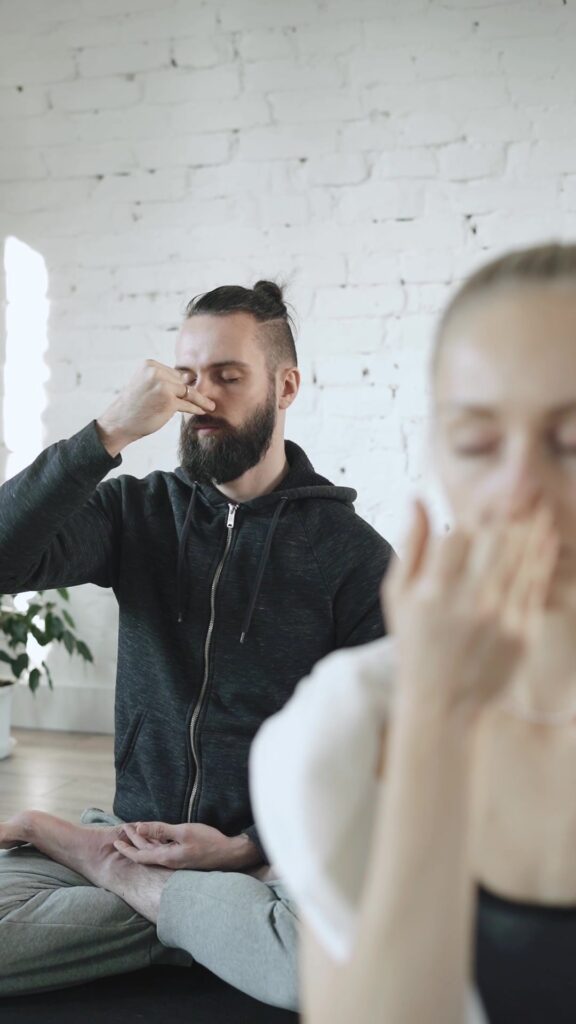
For these breaths it is important to remember that they should always be done through the nose (unless we have a bad cold) and from the abdomen, filling the lower part of the lungs first and then the rest.
To achieve this, it is important to be aware of the diaphragm, the muscle that allows the lungs to fill with air. The movement of the diaphragm stimulates the vagus nerve, which is responsible for the functions of the parasympathetic division, and therefore helps us even more to achieve the desired benefits, taking away the stress of the sympathetic division.
It is also important that both inhalation and exhalation are continuous and fluid, and that they last for all the indicated seconds. If our lung capacity does not allow it, we can start with shorter intervals.
If we find it difficult to hold the air or to let it in slowly, so as not to fill or empty the lungs too soon, we can use the sea technique.
The sea technique consists of slightly closing the glottis so that the air has less space to enter and exit (just as when we pinch the mouth of a balloon to control the air coming out). To understand it, put your hand a few centimeters in front of your mouth and let the air flow out through your mouth, as if you wanted to fog up a pane of glass. Can you feel the warm air? Now do exactly the same, but with your mouth closed, letting the air flow out through your nose. If you have done it correctly, your inhalation and exhalation become louder, somewhat like the sound of the sea. Hence the name.
Types of breath of water
With these considerations in mind, here are the two exercises that allow us to breathe in a way that enhances cardiac coherence:
👉 4:4 breathing
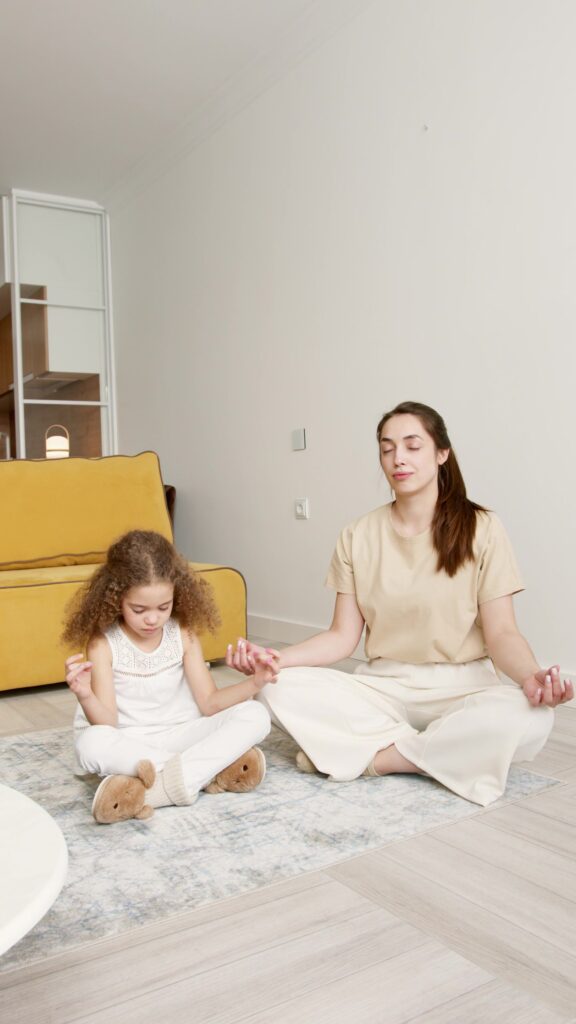
We will inhale through the nose for four seconds, hold our breath for one second, exhale for four seconds, do a one-second hold with empty lungs, and start again.
This breath has a 10-second cycle, which allows us to perform 6 cycles per minute. Just what the theory says will allow us to reach our center.
Depending on age and lung capacity, these intervals may vary a little, but with training, this would in principle be the best way to breathe, as long as we fill our lungs from the bottom, mobilize the diaphragm and breathe through the nose.
👉 Alternate breathing
Alternate breathing is very similar to 4:4 breathing. We repeat the same cycles, with the same techniques: moving the diaphragm and filling the lungs from bottom to top. The difference is that during the first inhalation we cover the right nostril. When our lungs are full, we switch nostrils and exhale through the opposite side. We breathe in through the same nostril we have just exhaled through and, when our lungs are full, we switch again. We only switch nostrils when our lungs are full.
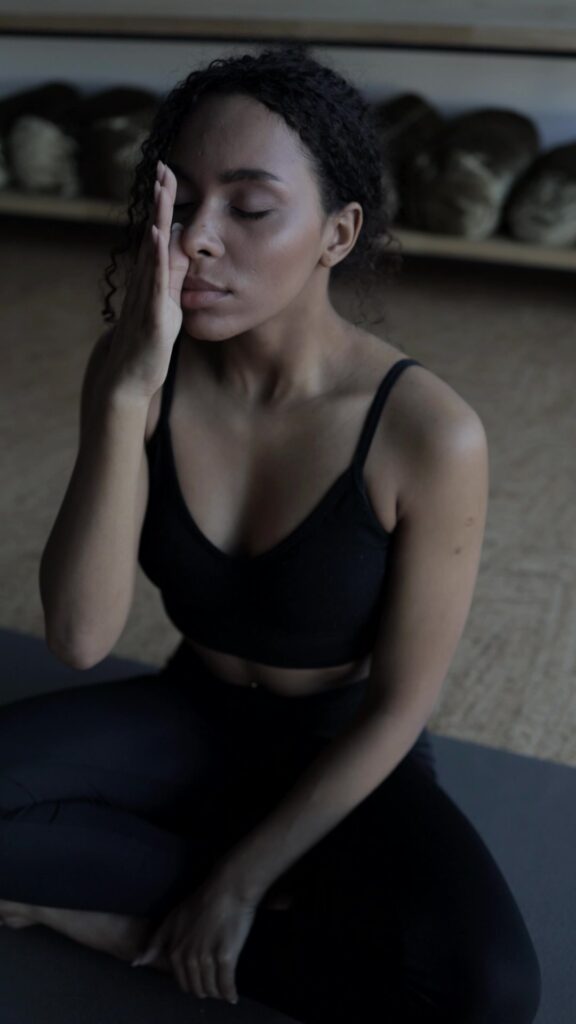
Both versions are useful to begin to concentrate (on any task) and also to begin to intuit.
Breath of water, cardiac coherence and higher emotions
These water breaths are very important for developing intuition, because they increase cardiac coherence a lot. But they are only one of the two ingredients of coherence. The other one we already know: higher emotions.
To create a higher emotion, we begin by breathing for a few rounds, paying attention to our heartbeat and feeling it relax. Next, we visualize a situation, a memory or an imagined scenario: something that happened to us, or the joy we will feel when we achieve a goal. We visualize whatever gives us the greatest feeling of well-being: a beach, a loved one…

Once the image is there, and while we continue breathing, we allow ourselves to feel the pleasure this “reality” we have created inside our mind gives us.
We feel the happiness, the joy and the bliss it gives us. And we stay there as long as we wish.
We must not limit ourselves to visualizing it: we must live it, feel it with as many senses as possible.
The more we practice these exercises, the easier it will be to enter into coherence, to recognize this state and to reproduce it.
These breathing exercises to develop intuition are among the most effective, because they increase our cardiac coherence.
Linden tea breathing
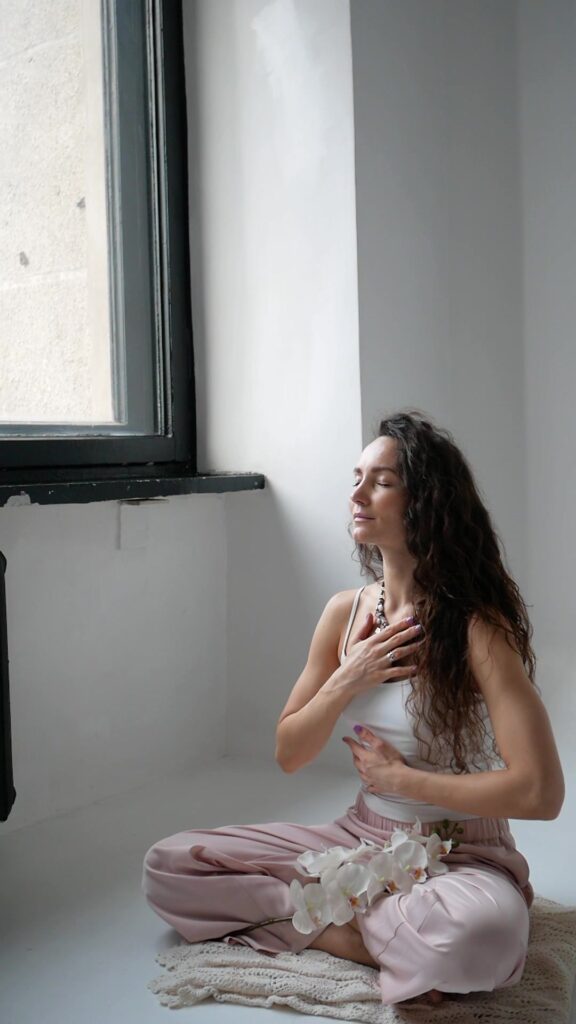
We came up with this name ourselves, because these are breaths that calm us down and, at night, can even help us fall asleep, like a cup of linden tea.
There are armies that train their soldiers in this breathing technique so that they can fall asleep in the worst circumstances.
These breaths are very useful if the stress level is too high and we need to calm down. In that case, we can do linden tea breathing before the breath of water, to return to our center.
But if these breaths are good for anything, it is undoubtedly for optimizing our hours of sleep. With them, we can be more in control of our body and decide when to fall asleep.
Guidelines for linden tea breathing
For these breaths, we use the same techniques as with the breath of water.
We breathe from the abdomen, always through the nose and, if necessary, with the sea technique (slightly closing the glottis).
These breaths can be done lying down for greater benefit, and if at the beginning the proposed cycles are difficult, we can shorten them a little, with the intention of gradually lengthening them.
👉 4:8 breathing
Inhale in four seconds, hold your breath for one second, exhale in eight seconds and hold for one second with empty lungs.
This adds up to 14 seconds, a little more than four cycles per minute: less than what is indicated to put ourselves in our center. So it is a slow breathing that inclines us toward the parasympathetic system.
👉 Square breathing
Inhale in four seconds, hold your breath for four seconds, exhale for four seconds and hold for four seconds with empty lungs.
This breathing has a 16-second cycle. It is even slower than the previous one and, therefore, also leads us toward the parasympathetic system.
These breaths are useful to begin to intuit after a busy day, although ideally we should then move on to the breath of water.
Why breathe through the nose?
In the nose we have different sensors that detect the flow of air. When no air passes, these sensors give an alarm (because they understand that the person could be choking) and activate the sympathetic system, just the opposite of what we want.
So breathing through the nose is of vital importance if we want to activate our parasympathetic nervous system.
To go further
If you are interested in breathing, we recommend looking for a breathing coach who can guide you in the different techniques, because learning it from a teacher is very different from learning it from a book.
We also recommend the Wim Hof method, which proposes a type of breathing that greatly increases energy levels.
Complement your practice with meditation for Intuitive Vision and discover our courses.
Do you feel this is going to become part of your life?
Not as something to achieve or to teach, but as a way of living.